If you are looking for a free English course that starts from the basics or helps you advance your speaking, writing, listening, and reading skills, this practical guide offers a fully executable roadmap at no cost — including options for verified learning proofs and digital certificates depending on the platform. We will divide the journey into clear stages: CEFR level assessment, selecting the right learning path, a customizable 90-day plan, tools for progress tracking, and options to obtain a certificate or a participation statement from reliable institutions when needed for your CV or LinkedIn profile.
To be precise: not every “free” course includes a free certificate. Some platforms provide free content but sell certificates or offer them through financial aid, while others issue free “Statements of Participation” that are verifiable or linked to a reputable university. We will explain each policy accurately and provide official links so you can make an informed decision.
What Do We Mean by “Free”?
Free Educational Content: Lessons, videos, exercises, and quizzes.
Proof/Certificate Options:
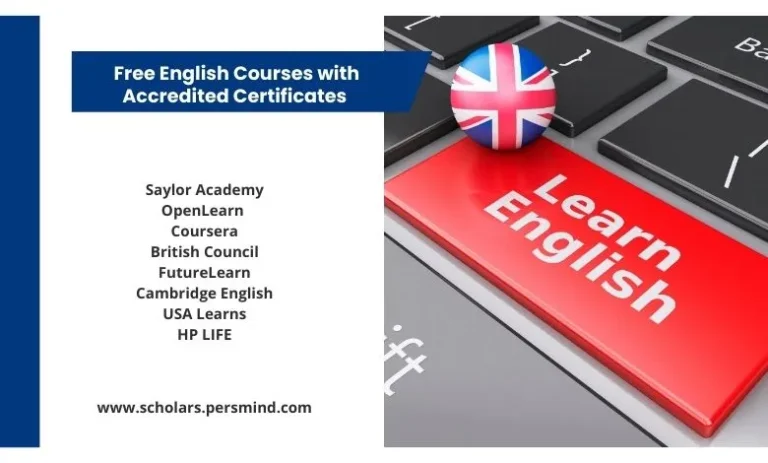
Digital Completion Certificate — verifiable on some platforms (e.g., Saylor Academy offers free certificates with verification links).
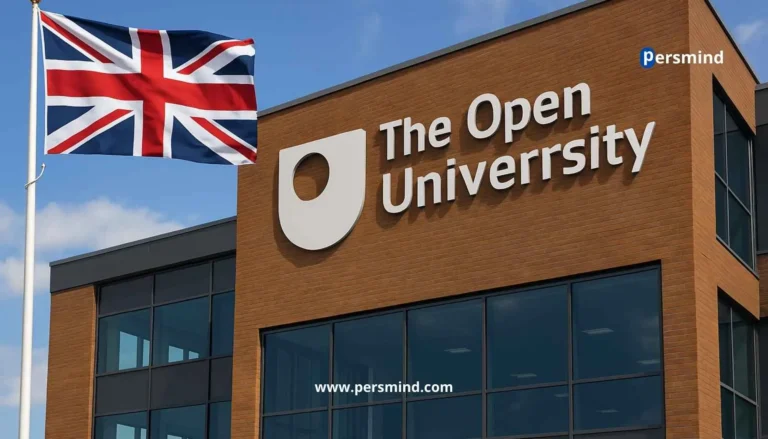
Statement of Participation — free proof of learning from open-university platforms (e.g., OpenLearn by the Open University). This serves as learning evidence, not academic credit.
Paid Certificate with Financial Aid/Exemption — available on university-level platforms such as Coursera (for example, English for Career Development by the University of Pennsylvania; content is free, and the certificate can be purchased or obtained via financial aid).
You can also check out the TOEFL iBT Test: Sections and Scores (0–120)
How to Choose the Right Free English Course
Define Your Goal: Do you need general English for communication and travel? Professional English for CVs, interviews, and emails? Or academic preparation for IELTS/Cambridge?
Assess Your CEFR Level: Use free evaluation tools (listed below) and connect your goal to your current level (A1–C1).
Understand Certificate Policy Before You Start: Is it free content only? Free participation proof? Or a verifiable certificate?
Choose a Trusted Provider: Examples include the British Council, Cambridge University, open-university platforms, or providers offering verified certificates.
Plan Your Time: Dedicate at least 30–45 minutes daily, with a weekly review to track progress.
Trusted Pathways for Free English Courses
1) Saylor Academy — Free English Courses with Verifiable Certificates
Why it’s a strong option: After completing the course and passing the final exam, you receive a free verifiable digital certificate — a rare benefit in the “free course” market.
Content: Academic writing, professional communication, grammar, and expression skills. The English category page lists the available free certificate courses.
Best for: Learners seeking a free English course with a certificate link for LinkedIn and their CV.
2) OpenLearn (Open University) — Free Courses with Participation Proof
Value: It carries the name of a top British university in open learning. Many courses offer free Statements of Participation upon completion (learning proof but not academic credit).
Recommended: “Everyday English” or “English: Skills for Learning” to improve grammar and study skills. Course pages specify the free proof policy.
3) Coursera — Free Content, Certificate via Purchase or Financial Aid
Highlighted Course: English for Career Development (University of Pennsylvania). You can audit for free; the certificate is available through payment or financial aid.
Best for: Learners who want a university-branded credential for free via funding, especially for career-related English (CV, LinkedIn, interviews).
4) British Council — Free Resources and IELTS Online Pathways
What It Offers: Integrated sections to improve reading, writing, listening, and speaking skills, plus IELTS prep courses (some paid for certificates or live sessions). The LearnEnglish portal has extensive free materials.
IELTS Preparation: “Understanding IELTS” on FutureLearn — free to audit; paid for certificate. Check your local British Council page for details.
5) Cambridge English — Free “Write & Improve” Writing Tool
Why It Matters: Writing is often the hardest skill. Write & Improve provides instant feedback and a CEFR-linked progress indicator, free of charge. Ideal for B1–C1 learners and valuable starting from B1.
You can also check out the Digital SAT Test: Structure and Timing
For regular updates on scholarships and academic opportunities, follow our official platforms:
CEFR Levels: Where Should You Start?
A1–A2 (Beginner): Focus on daily vocabulary, simple sentences, pronunciation, and repetition. Include short videos and basic reading tasks.
B1 (Intermediate): Start writing descriptive paragraphs and simple CVs; practice practical conversations and formal emails.
B2 (Upper-Intermediate): Work on cover letters, presentations, discussion skills, and advanced grammar review.
C1 (Advanced): Refine coherence, argumentation, and analytical writing through reports and summaries.
90-Day Plan: A Practical “Free English Course”
Phase 1: Diagnosis and Habit Building (Weeks 1–2)
Take a placement test or use Write & Improve tasks to get an approximate CEFR level.
Study 30–45 minutes daily (5 days/week), plus 90 minutes of weekly review.
Tools: reliable English–English dictionary, vocabulary notebook, habit tracker.
Phase 2: Core Skill Development (Weeks 3–6)
A1–A2: Take a foundation course (OpenLearn/British Council) with daily pronunciation and vocabulary practice.
B1–B2: Enroll in a Saylor writing/communication course (free certificate later), and upload a weekly text to Write & Improve.
C1: Focus on academic/professional writing (reports, memos), balancing advanced listening and long-form reading.
Phase 3: Specialization by Goal (Weeks 7–10)
Career English: Start English for Career Development on Coursera (free audit, financial aid for certificate).
IELTS Prep: Join British Council or Understanding IELTS (free content, optional paid certificate).
Academic Proof: Complete an OpenLearn course and obtain a free Statement of Participation.
Phase 4: Certification (Weeks 11–12)
Complete a Saylor course for a free verifiable certificate and add it to LinkedIn.
Download your OpenLearn participation proof.
If approved for Coursera aid, finish graded assignments and issue the funded certificate.
Suggested Daily Program (45–60 Minutes)
10 min — Vocabulary/Pronunciation
15 min — Short reading + note useful expressions
15 min — Focused listening (podcast/video) + write 3–5-sentence summary
10–20 min — Write a short task and upload to Write & Improve twice weekly for CEFR feedback
Free Support Tools
Write & Improve (Cambridge): Instant CEFR feedback on writing
British Council: Grammar, practice tasks, skill-based lessons
OpenLearn: Structured modules with participation proof
Saylor Academy: Free English courses with verifiable certificates after final exams
You can also check out the GRE: The Complete Guide to Registration
Difference Between a “Certificate” and a “Statement of Participation”
Verifiable Certificate: Includes a unique link or ID allowing employers to confirm authenticity (Saylor).
Statement of Participation: Confirms completion of an open course (OpenLearn). Valuable due to the institution’s name, but not for academic credit.
Practical Use Cases
Scholarship Applicant: Free Saylor certificate + OpenLearn proof + funded Coursera certificate (English for Career Development).
Job Seeker: Coursera career course with funded certificate + weekly writing via Write & Improve + British Council business English units.
IELTS Candidate: Start with British Council materials, then take Understanding IELTS when ready for exam tasks.
Mistakes to Avoid
Confusing “Free Content” with “Free Certificate” — always check certificate policy on the course page.
Neglecting Documentation — save verification links and add them to your LinkedIn “Licenses & Certifications” section.
Overloading Without a Plan — jumping between many courses reduces efficiency. Stick to one path every two months.
Passive Learning — progress requires writing with feedback. Use Write & Improve regularly.
Frequently Asked Questions
Can I really complete a free English course and get a free certificate?
Yes. On Saylor Academy, you can earn a free verifiable completion certificate after meeting course requirements and passing the final exam. Other platforms offer free content with paid or funded certificates.
Is the OpenLearn participation proof useful?
Yes. It’s an official learning statement from a respected UK university, showing commitment to continuous learning. However, it is not a professional license or academic credit.
What is the best free course for career preparation?
English for Career Development (University of Pennsylvania). It teaches resume writing, LinkedIn profiles, and interviews. Free to audit; certificate available via purchase or financial aid.
How can I prepare for IELTS for free?
Use British Council resources and Understanding IELTS (usually free to watch), then decide if you need a paid certificate or live sessions later.
How can I improve my writing quickly?
Write a short paragraph daily and upload it to Write & Improve for CEFR-linked feedback. Edit and re-submit until your score improves.
Official Reference Links
Saylor Academy: Free verifiable certificates (Certificates page + English category)
OpenLearn: Free courses and participation statements (Free Courses page + sample proof)
Coursera: English for Career Development (UPenn) — details on free study and financial aid
British Council: LearnEnglish + IELTS preparation materials
Cambridge: Write & Improve — free CEFR-linked writing tool
Conclusion
You can design your own free English course by combining:
A skill-based course with a verifiable free certificate (Saylor)
An open-university module with prestigious proof (OpenLearn)
A professional course with optional funded certificate (Coursera)
Official measurement and improvement tools (British Council + Cambridge Write & Improve)
With this 90-day structured plan, you will move from scattered effort to focused learning — backed by verifiable evidence suitable for LinkedIn and your CV — without paying anything unless you choose to upgrade to a paid certificate.
For regular updates on scholarships and academic opportunities, follow our official platforms:

0 Comments