
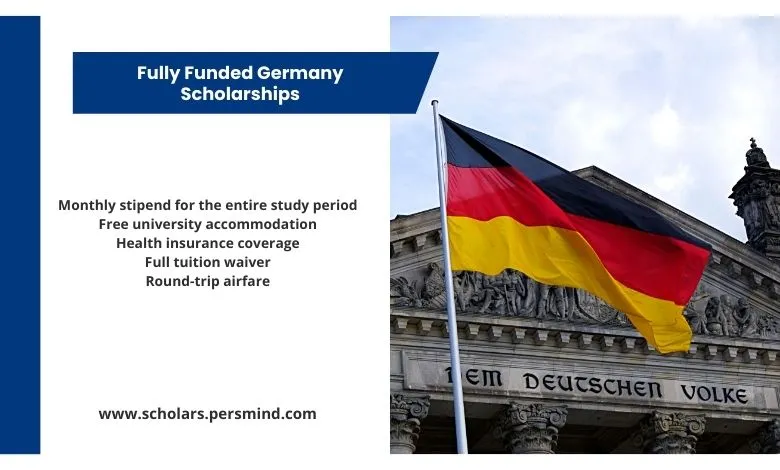
If you are looking for fully funded Germany scholarships 2026 to study within one of the strongest higher education systems in the world, this article serves as a comprehensive and practical guide for you. You will learn about the most important German scholarship programs, the benefits of each scholarship, general eligibility requirements, and step-by-step application procedures, along with official links to verify tuition fees, requirements, and figures before starting any step.
We rely on trusted programs such as DAAD scholarships, the Helmut-Schmidt Programme, SBW Berlin Scholarship, and the Deutschlandstipendium, which provides monthly financial support for high-achieving students.
This guide is suitable for Bachelor’s, Master’s, and PhD students, as well as for anyone who wishes to study in Germany with funding that covers tuition fees and living costs as much as possible.
You can also check out the University of Camerino Scholarship
Why Are Germany Scholarships 2026 a Golden Opportunity for International Students?
Germany is today one of the most attractive destinations for international students for several reasons:
The presence of leading research universities such as Technical University of Munich (TUM), Heidelberg University, Free University of Berlin, and others.
Many programs are offered in English, especially at the Master’s level.
In many public universities, tuition fees are very low or almost symbolic compared to countries like the United States and the United Kingdom.
Government scholarship programs such as DAAD provide monthly funding that covers housing, health insurance, and basic living costs.
Therefore, when you search for fully funded scholarships in Germany 2026, you are not only looking for a scholarship, but for a long-term investment in a strong academic and professional career within a developed and secure environment.
For regular updates on scholarships and academic opportunities, follow our official platforms:
Types of Fully Funded Germany Scholarships 2026
Before going into details, it is important to understand the types of scholarships available in Germany:
Government Scholarships (DAAD and Federal Programs)
Examples include DAAD EPOS, DAAD Helmut-Schmidt Programme, and others.
These are usually fully or almost fully funded and focus on students from developing countries and those with strong academic performance.
Scholarships from Private / Social Foundations
Such as the SBW Berlin Scholarship, which targets students from difficult socio-economic backgrounds who are committed to community-based projects.
Direct University Scholarships
Such as Deutschlandstipendium, offered by many German universities in partnership between the public and private sectors, providing fixed monthly financial support for outstanding students.
Scholarships from Political and Charitable Foundations
Such as Heinrich Böll Foundation, Konrad Adenauer Foundation, Friedrich Ebert Foundation, and others.
These often require an interest in politics, civil society, or social engagement.
You can also check out the Brunei Darussalam Government Scholarship
Most Important Fully Funded Germany Scholarship Programs 2026
DAAD EPOS Scholarship (Master’s and PhD – Development-Related Fields)
DAAD EPOS is one of the most well-known funded German scholarship programs for students from developing countries, covering Master’s and PhD programs related to development (engineering, energy, urban planning, public health, economics, etc.).
Benefits and Funding:
Monthly stipend of approximately:
€992 per month for Master’s students
€1,300 per month for PhD students
Health insurance, accident insurance, and personal liability insurance
International travel allowance from your home country to Germany and back (if not funded by another source)
Additional monthly rent subsidy
Monthly allowance for accompanying family members
Note: Exact details vary depending on the university, program, and year of announcement. Always consult the official website before applying.
Official link to verify details
DAAD Helmut-Schmidt Programme (Master’s in Public Policy and Good Governance)
The Helmut-Schmidt Programme is one of the strongest scholarship programs in Germany for students interested in public policy, administration, governance, law, and social sciences, with a special focus on preparing future leaders from developing countries.
Key Benefits:
Full exemption from tuition fees in participating programs
Monthly stipend currently around €992 for most programs, with possible reductions in a specific semester for some fields
Health insurance coverage, travel allowance, and study/book grant
Possible additional allowance for rent or accompanying family members in specific cases
Mandatory German language course in Germany for up to 4 months before the start of studies
Official link to verify details
SBW Berlin Scholarship (Bachelor’s & Master’s – Community Engagement Focus)
The SBW Berlin Scholarship targets international students who have clear social projects or a strong commitment to community service, especially those from financially challenging backgrounds. The scholarship focuses on funding studies in Berlin while linking students to real social projects.
Benefits and Funding:
Fully funded furnished room in shared student apartments in Berlin
Monthly living allowance of approximately €480 to cover food and basic daily expenses
Coverage of university tuition fees (with a cap or small contribution in some high-fee programs)
Contribution to travel costs to and from Berlin in certain cases
Official SBW Berlin Scholarship page for international students
Deutschlandstipendium (National German Scholarship – Monthly Support for Excellence)
Deutschlandstipendium is not usually considered a “fully funded scholarship,” but it is a strong financial supplement during your studies, providing fixed monthly support to outstanding students at many German universities.
Benefits:
€300 per month for at least one year, extendable in some cases up to the standard study period
Jointly funded by the federal government and the private sector (companies, foundations, individuals)
Available to German and international students based on academic excellence and social engagement
Official examples:
General Admission Requirements for Fully Funded Germany Scholarships 2026
Exact requirements vary by program and university, but the main common criteria include:
Strong Academic Record
A good or excellent GPA in your most recent qualification (high school, Bachelor’s, or Master’s).
For programs such as DAAD EPOS and Helmut-Schmidt, being among the top students of your cohort or having a strong academic profile is preferred.
Language Proficiency (English or German)
Many development-related and public policy Master’s programs are taught in English and require IELTS / TOEFL with program-specific scores.
Programs taught in German require exams such as TestDaF, DSH, or Goethe-Zertifikat at a specified level.
DAAD programs often include funded German language courses before study, but this does not replace the minimum language requirements set by universities.
Work Experience (Especially for Development and Policy Programs)
Programs such as EPOS and Helmut-Schmidt usually require 2–5 years of relevant professional experience.
Social Commitment or Community Project (SBW Berlin & Deutschlandstipendium)
SBW Berlin requires a clear social project idea and a plan for applying knowledge after returning to your home country.
Deutschlandstipendium values community involvement and volunteering alongside academic excellence.
Geographic Eligibility
Many DAAD programs target specific countries (particularly developing or middle-income countries), so you must ensure your country is listed on the official program page.

Step-by-Step Application Process for Fully Funded Germany Scholarships 2026
Step 1: Identify the Program and Degree Level
First, decide whether you are targeting a Bachelor’s, Master’s, or PhD.
Use the DAAD scholarship database and search with keywords such as:
“Master”
“PhD”
“Development-Related Postgraduate Courses”
“Public Policy”
Carefully read each program description:
Available fields
Eligible countries
Language and experience requirements
Financial benefits (monthly stipend, travel, insurance)
Step 2: Research the Study Program at the University
Scholarships are often tied to specific programs at specific universities, especially for EPOS and Helmut-Schmidt:
Open the program page via the DAAD link
Check the list of participating universities
Visit the university’s website and review:
Study plan
Language of instruction
Application deadlines
Required documents
Step 3: Prepare the Required Documents
Common documents across most German scholarships include:
Scholarship/university application form (online or PDF)
Academic CV (preferably Europass or similar format)
Motivation Letter, explaining:
Why Germany?
Why this specific program?
How you will use the acquired knowledge in your home country (very important for DAAD and SBW Berlin)
Research proposal (for PhD and some research-based Master’s programs)
Certified and translated diplomas and transcripts (English or German)
One or more recommendation letters from professors or employers
Language certificates (IELTS / TOEFL / TestDaF / DSH as required)
Valid passport copy
Make sure each document is saved as a clearly named PDF file (YourName_DocumentType).
Step 4: Apply via DAAD or University Portal
Depending on the scholarship:
DAAD EPOS & Helmut-Schmidt:
Application may be via DAAD portal or through the university first, then DAAD.SBW Berlin:
Application is usually submitted via email or an online form according to the latest guidelines.Deutschlandstipendium:
Application is submitted directly through the university (e.g., TUM, Konstanz, FAU).
Always:
Respect the application deadline
Avoid last-day submissions due to server overload
Double-check that all documents are uploaded correctly
Step 5: Follow Up After Submission
After submitting your application:
Regularly check your email (Inbox and Spam)
You may be asked to:
Upload additional documents
Correct missing files
Attend an online interview or test
Respond within 24–48 hours to demonstrate seriousness and professionalism.
Step 6: Admission and Scholarship Award
If selected, you will typically receive:
University admission letter
Scholarship award letter outlining funding type, amount, and conditions
Keep these documents carefully for:
German student visa application
Student or private accommodation applications
You can also check out the Turkey Government Scholarship
After Receiving the Scholarship: Visa and Travel Preparation
Once you obtain a fully funded Germany scholarship and university admission:
Identify the nearest German embassy or consulate
Book an appointment for a National Student Visa (Type D)
Visa file usually includes:
Admission letter
Scholarship award letter (often replaces the need for a blocked bank account)
Valid passport
Biometric photos
Required visa forms
In many fully funded cases, the scholarship itself is accepted as proof of financial capacity. However, always check the official embassy website in your country for 2026-specific requirements, as regulations may change.
Golden Tips to Increase Your Chances of Acceptance in Germany Scholarships
Start early: Some 2026 programs open in mid or late 2025. Begin preparations 6–9 months in advance.
Focus on your motivation letter:
Describe a real challenge in your country or region
Explain how studying in Germany helps address it
Clarify your post-graduation or return plan
Link work experience to the field:
EPOS: development, energy, environment, planning, public health
Helmut-Schmidt: public policy, civil society, NGOs
SBW Berlin: focus on your social project and its impact
Apply to multiple programs strategically, not by copy-pasting
Avoid misleading claims or unrealistic guarantees in your application
For regular updates on scholarships and academic opportunities, follow our official platforms:
Common Mistakes to Avoid When Applying for Germany Scholarships
Not reading official guidelines thoroughly
Relying only on unofficial websites
Submitting incomplete or uncertified translations
Writing a generic motivation letter
Delaying visa application after acceptance
You can also check out the Scholarships in Australia Without IELTS
Frequently Asked Questions About Fully Funded Germany Scholarships 2026
Are all Germany scholarships 100% fully funded?
No. Programs like DAAD EPOS, Helmut-Schmidt, and SBW Berlin are very close to full funding, while Deutschlandstipendium provides partial monthly support (€300).
Is IELTS always required?
Not always. English-taught programs usually require IELTS/TOEFL, while German-taught programs require TestDaF or DSH. Always check each program individually.
Can I bring my family with me?
Some DAAD programs offer additional family allowances, but this is not guaranteed and depends on official conditions.
Are there application fees?
DAAD scholarships usually do not charge application fees. Some universities may charge small processing fees. SBW Berlin typically does not charge application fees, but always check the latest guidelines.
Conclusion: How to Benefit from This Guide
If you are serious about studying in Germany in 2026 and obtaining fully funded Germany scholarships 2026, start now by:
Selecting 2–3 programs that match your field and experience
Preparing a professional CV and tailored motivation letters
Reviewing official links for updated fees, funding amounts, and 2026 requirements
By following these steps, you position yourself strongly to compete for the best Germany scholarships 2026 for international students in a realistic, structured, and reliable way—without relying on false promises or unverified sources.

0 Comments